Monday, April 18, 2016

Dow Tops 18,000 Even As Earnings Hit 12-Month Lows

Who needs an economy? Who needs jobs? In a world of digital money, who even needs reality? We have digital prosperity now!


Friday, April 8, 2016

Look Out Belooooow! Fed Slashes GDP Estimate!

Recession alert:
Last month, the Fed slashed the Q1 2016 GDP estimate from 1.2% to just .4%. Now today, it slashed it even further to just .1%! That's barely breathing!

They probably doctored the data just to keep it from dipping into negative territory!

Minimum Wage Hikes! Icarus Rising, Er, Uh, Falling!


Monday, April 4, 2016

Headlines for April 4, 2016

With news like this, the Dow should be up at least 100 points!   /sarc off

Sunday, April 3, 2016

The Illusion Continues, With Support By Central Bankers

As earnings continue to show weakness, central bankers continue their interventions to maintain the illusion of prosperity. Eventually, there will be another collapse. It will be historic!

And when will this happen? I don't know! My best guess is that it will occur during the next recession as the following happens:
1) Revenues to the US government collapse due to lay-offs and fewer people are working.
2) Demands for entitlement spending skyrocket, and more and more people require help with housing and food.

Of this I am certain:
1) The interest on US government debt is now about $1/2 trillion per year.
2) The US government will borrow an additional $1/2 trillion this fiscal year.
3) The Congressional Budget Office forecasts that by the end of the next president's first term of office, the US will be borrowing $1 trillion/year! That's about 1/4 of the budget!

This guarantees a debt crisis sometime in the next few years! It will collapse the bond market and the US Dollar. It will bring a depression that will dwarf the Great Depression of the 1930s. It will likely also bring horrible bloodshed as desperate people engage in desperate behavior to survive.

Tuesday, March 29, 2016

The Power of One Central Banker

This chart shows the market reaction to Janet Yellen's remarks this morning in a speech she gave. The Dow is up 100 points and still climbing. We are once again near the all-time record high levels that we reached last year, despite that corporate earnings have declined since then. That means that price to earnings ratios are now even more stratospheric and bubbly than they were then, because at the same high price levels but with lower earnings, the extremity of the ratio is even higher.

Should any one person have that kind of power to manipulate the market? It doesn't change the magnitude of risk to investors. It only changes the perception of risk, and the willingness to take greater and greater risk. When investors are once again forced to acknowledge that risk, the consequences will be calamitous!

Tuesday, March 22, 2016

A US Government Debt Crisis Is Ineluctable!

I placed this comment on a finance website earlier today:

  • US Government debt is growing more than 2 times faster than GDP.  Q4 2015 GDP = 1.2%, debt growth this year is 2.6%.
  • Interest alone on the debt is $.5 trillion this year! And that's with central bank interest rate suppression!
  • The US CBO says that by the end of the next president's first term, the US will begin to incur $1 trillion debt per year -- indefinitely.
  • If interest rates on the 2-yr bond return to just 2% per year, the interest will consume virtually ALL US government revenue just to pay the interest on the national debt.
  • There are now more recipients of government assistance, than there are taxpayers paying for those benefits! And it's not even close!
A debt crisis is coming. Calamity is certainty! Plan and prepare accordingly! When it happens, all US government programs will come to a sudden end.

Delusional Markets

And this is what bubbles are made of!

Friday, March 18, 2016

The Bubble Is Back!


The second chart shows the various central bank interventions since February 1st.

Thursday, March 17, 2016

Economic DIchotomy -- Stocks Soar As Earnings Crash

I couldn't help noticing the contradiction today between stocks, which just went positive for 2016, and both employment and corporate earnings! This is what a bubble looks like!


Wednesday, March 2, 2016

Obama's Legacy


Tuesday, March 1, 2016

Bad News Is Good News!

Who needs an economy? Who needs jobs? We have PRINTED prosperity now! 

Hey Reuters! How About Some Propaganda?

Less than 2 hours later, it was revised to this:
The folks at Google caught on to the tomfoolery:

Thursday, February 18, 2016

Coming Cataclysm: Negative Interest Rates

This is a sign of desperation by central bankers that they would charge interest to bank depositors and government lenders. And they want to ban the use to cash to prevent runs on the banks. It's going to bring a calamity!

By Stephen Roach today:
NEW HAVEN, Conn. (Project Syndicate) — In what could well be a final act of desperation, central banks are abdicating effective control of the economies they have been entrusted to manage. First came zero interest rates, then quantitative easing, and now negative interest rates — one futile attempt begetting another.
Just as the first two gambits failed to gain meaningful economic traction in chronically weak recoveries, the shift to negative rates will only compound the risks of financial instability and set the stage for the next crisis...
This could be the greatest failure of modern central banking...
...most major central banks are clinging to the false belief that there is no difference between the efficacy of the conventional tactics of monetary policy — driven by adjustments in policy rates above the zero bound — and unconventional tools such as quantitative easing and negative interest rates...
Two serious complications have arisen from this approach.
The first is that central banks have ignored the risks of financial instability.
Drawing false comfort from low inflation, overly accommodative monetary policies have led to massive bubbles in asset and credit markets, resulting in major distortions in real economies. When the bubbles burst and pushed unbalanced economies into balance-sheet recessions, inflation-targeting central banks were already low on ammunition — taking them quickly into the murky realm of zero policy rates and the liquidity injections of quantitative easing.
Second, politicians, drawing false comfort from frothy asset markets, were less inclined to opt for fiscal stimulus — effectively closing off the only realistic escape route from a liquidity trap. Lacking fiscal stimulus, central bankers keep upping the ante by injecting more liquidity into bubble-prone financial markets — failing to recognize that they are doing nothing more than “pushing on a string” as they did in the 1930s.
The shift to negative interest rates is all the more problematic. Given persistent sluggish aggregate demand worldwide, a new set of risks is introduced by penalizing banks for not making new loans. This is the functional equivalent of promoting another surge of “zombie lending” — the uneconomic loans made to insolvent Japanese borrowers in the 1990s.
Central banking, having lost its way, is in crisis. Can the world economy be far behind?

Read the rest here. 

Monday, February 15, 2016

Central Bankers Intervene Again

This was on Bloomberg today!

Friday, February 12, 2016

One Moment of Fed Truth-Telling

"The last duty of a central banker is to tell the public the truth." - Alan Blinder, former Federal Reserve Board Vice Chairman

Tuesday, February 9, 2016

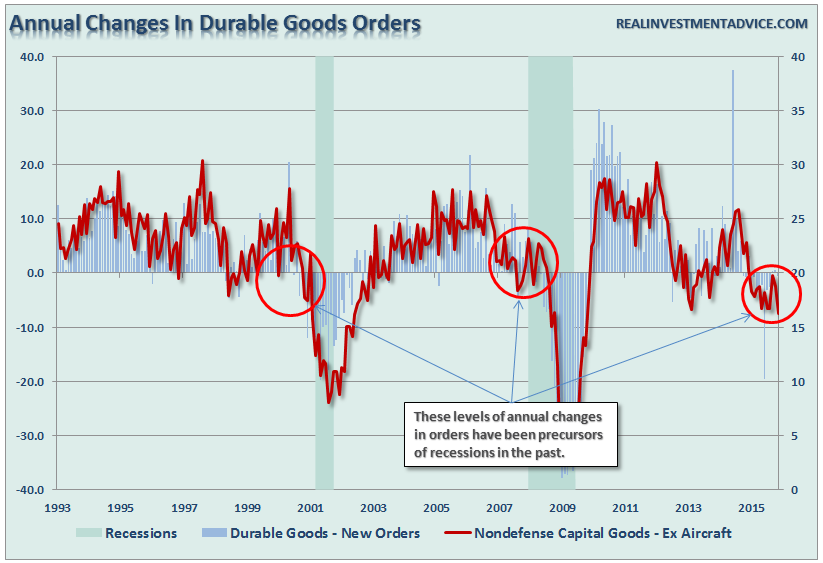
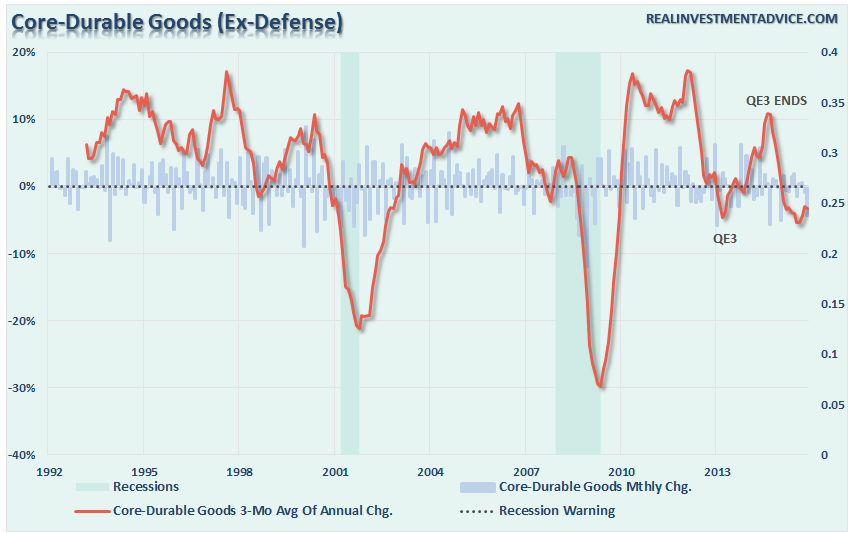
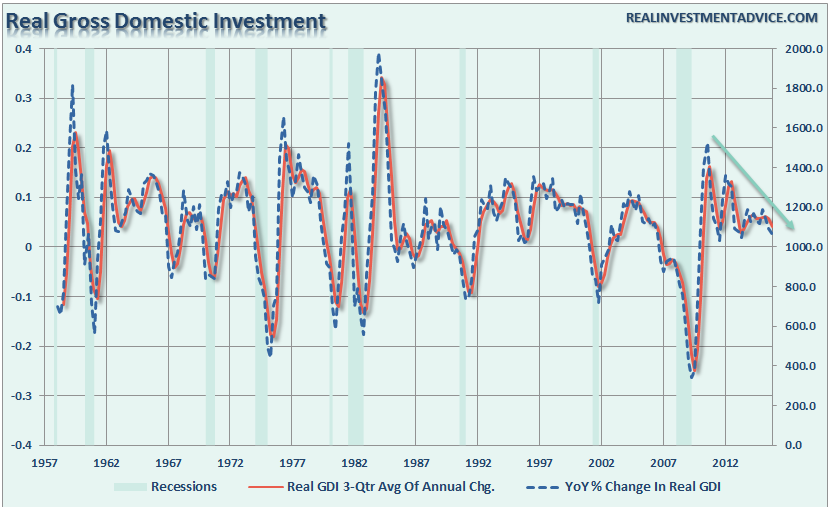
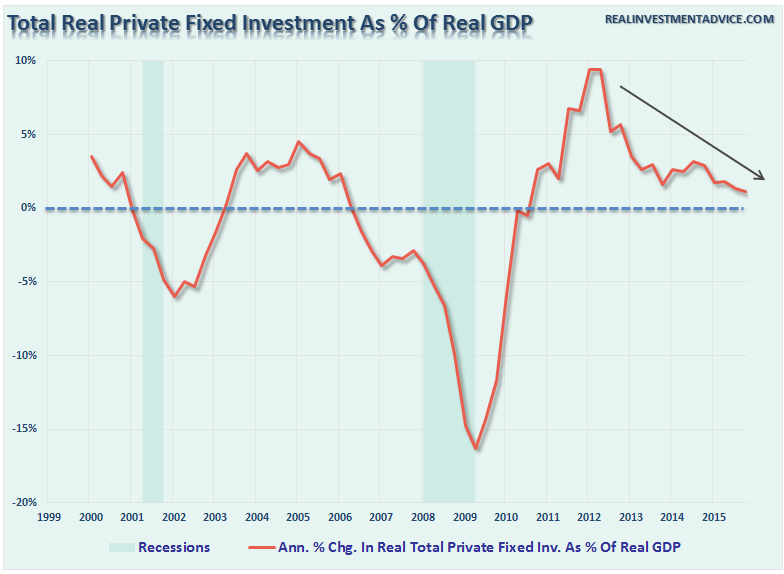
Economic Data Showing Significant Weakness

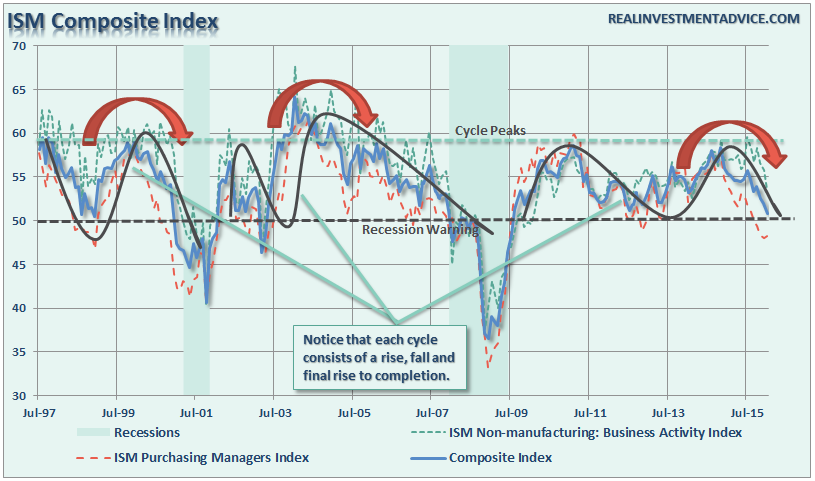
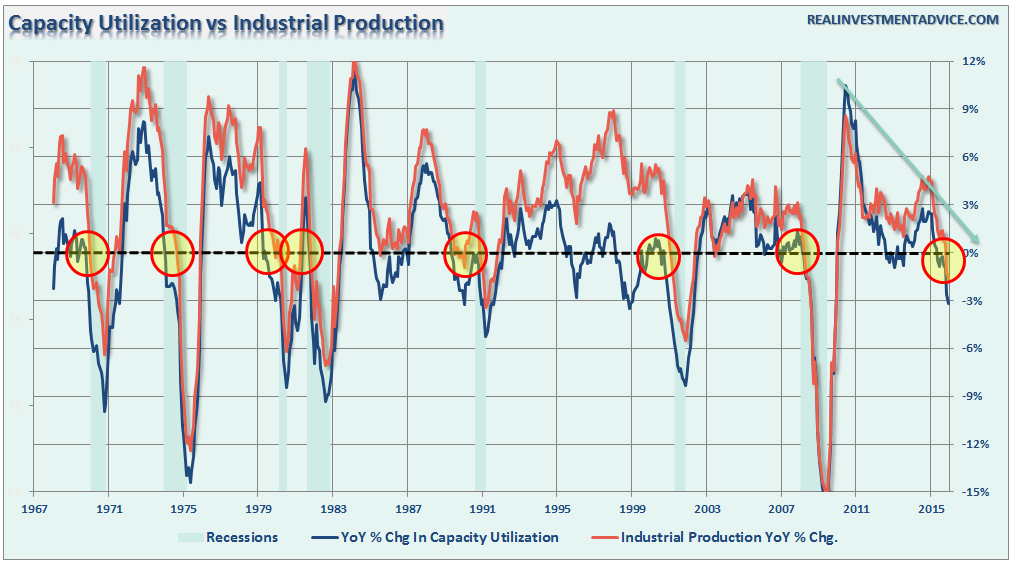
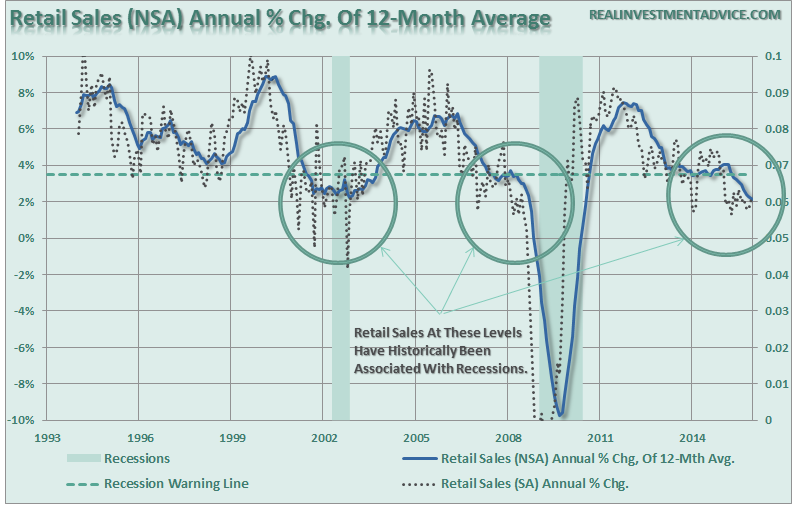
First, the bird's-eye view. Thanks to Lance Roberts at Real Investment Advice for this perspective.
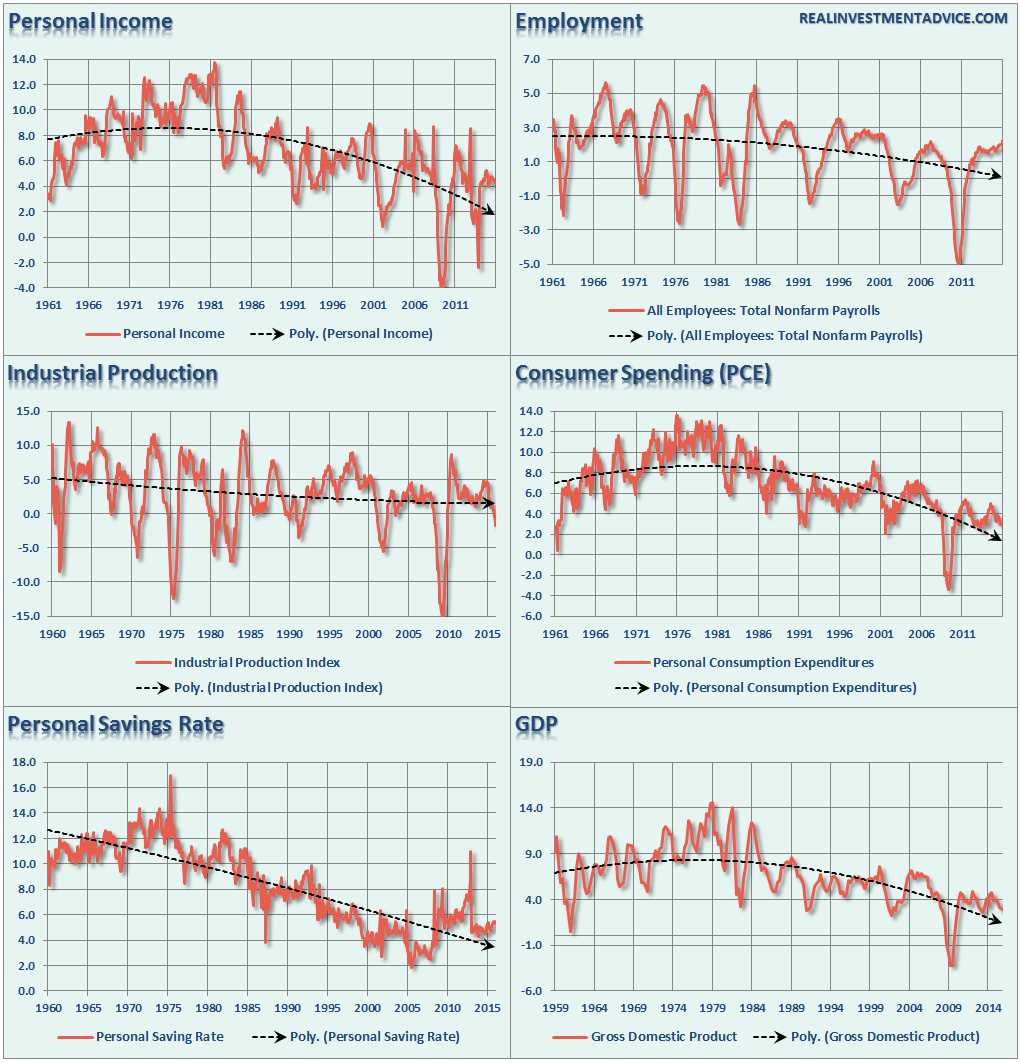
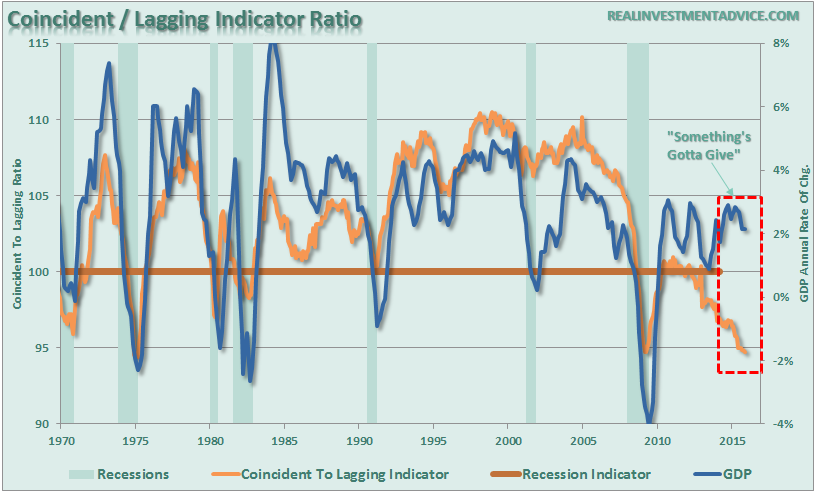
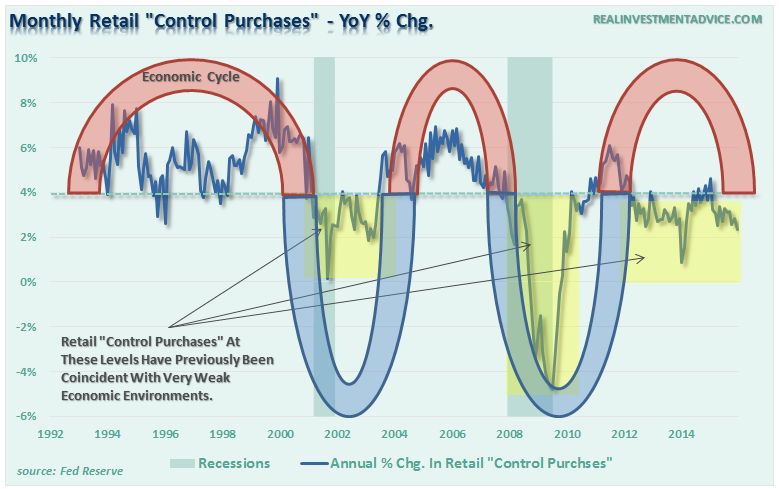
More charts showing the dismal reality:
At least this one looks like it may have bottomed:


Monday, February 8, 2016

Dow Loses 600 Pts in 2 Trading Sessions

On Friday, stocks lost about 250 points, and today, the Dow has lost 350 points so far. Perilous times!


Friday, January 29, 2016

Stocks Leap 400 Pts Because BOJ Begins Negative Interest Rates?

This is stunning! Wall St sent stocks skyrocketing today because BOJ's Kuroda decided to try negative interest rates. More experimental monetary policy! Remember Mr. Bernanke's "unprecedented measures"? That's an admission that they are using us all as their economic experimental guinea pigs! Unproven economic policy without accountability! Eventually, one of them will bring a calamity!


Thursday, January 28, 2016

Earnings Suggest Recession

from Marketwatch today:


Bellwether CAT Sales Decline 23%

Caterpillar is the world' largest manufacturer of industrial equipment, so when sales decline, it's an indicator of global economic weakening. Even still, a decline that large, of 23%, is a huge red flag!

Wednesday, January 27, 2016

Leading Economist Predicts Recession in 2016

Dr. Mark Skousen, who has a Ph.D. in  economics, and has been named as one of the world's leading economists, said the following on January 21st:


“Gross output (GO), the new measure of U. S. economic activity published by the Bureau of Economic Analysis, slowed significantly in the 3rd quarter of 2015. And the Skousen B2B Index actually fell slightly in real terms in the 3rdquarter. Both data suggest the possibility of a mild recession developing in 2016...
"In nominal terms, the adjusted GO growth rate declined from 6.3% in Q2 to 2.3% in Q3. In the same period GDP fell from 6.0% to 2.7%, illustrating the higher degree of volatility of GO compared to GDP (see chart below).  The higher volatility indicates that GO might be a better indicator of economic activity than GDP, since GO includes economic activity that GDP leaves out.”

Here's his own headline:

Tuesday, January 26, 2016

Wall St Journal Op Ed Spells Out Risks


"The Fed’s monetary policy of extraordinarily low interest rates helped create the asset bubbles in stock and commodity prices that are now bursting. In retrospect, the Fed’s rate hike last month will likely be viewed as monetary malpractice. None of this is likely to forestall turmoil in credit markets. Investors are wise to be worried... This year is likely to be one of financial crises in industries and countries around the world.
Gerald O'Driscoll, former vice president at The Dallas Fed, posteed op-ed at The Wall Street Journal,

So how does the current sell-off compare to previous market crashes? Here's a look! 

Dow Rises 300 Points on News of "earnings recession"!


From JP Morgan chief equity strategist Dubravko Lakos-Bujas, who cut his forecast for the S&P 500 for this year by a whopping 200 points! Oooooooh! 
"The risk-reward for equities is deteriorating. There is increasing risk that elevated volatility starts incurring enough technical damage to market psychology and spills over, negatively impacting investor, consumer and business sentiment, resulting in a lack of risk taking, and eventually creating a negative feedback loop into the real economy. Going forward we see equity risk remaining asymmetric to the downside given:
  1. rising risk of US earnings recession,
  2. diverging central bank policies and a Fed that is trying to tighten causing USD to strengthen,
  3. US manufacturing sector already in recession territory and non-manufacturing sector continuing to decelerate,
  4. deteriorating macroeconomic backdrop with China posing a significant risk to global markets,
  5. credit spreads widening and high yield approaching recession levels,
  6. late cycle dynamics,
  7. continued elevated volatility likely to impact sentiment—VIX has been averaging ~20 for the last 6 months"
 And on that news, the Dow is UP nearly 300 points today! Go figure! 

Monday, January 25, 2016

Dr. Hussman Tells It Like It Is! How Dare He!

I loved this today:
"With respect to the market as a whole, I’ve periodically observed that market crashes typically only emerge after the market first loses something on the order of 14%, rebounds from its initial loss, and then breaks that prior support. That support level remains about the 1820-1850 area on the S&P 500. After selling down to that level last week, the market staged a nearly obligatory dip-buying advance, aided by a parade of central bankers brandishing their large but ineffectual bazookas at the World Economic Forum in Davos."

Based upon historically reliable data, Dr. Hussman suggests that a recession is now the most likely outcome. Look out below! Dow closed down 209 points, with the S&P just about 20 points from the previous support level that represents the crash point. 

Friday, January 15, 2016

Recessionary Red Flags Flashing Everywhere!

These headlines are all just from today. This is one of the most recessionary news days I've seen in ten years!


Wednesday, January 13, 2016

Societe Generale Economist Predicts 75% Decline in Stocks


 I have always said that if inflating asset prices via loose monetary policy were the route to economic prosperity, Argentina would be the richest country in the world by now ?and it is not! The Fed's pursuit of negligently loose monetary policies since 2009 is a misguided attempt to boost economic growth via asset price inflation and we will now reap the whirlwind (the ECB, Bank of Japan and the Bank of England are all just as bad). One of the main problems has been the overconfidence with which the Fed pursues their objective. Yet in the run-up to the 2008 Global Financial Crisis they demonstrated their lack of understanding of the disastrous impact of excessively low Fed Funds. Even in retrospect they remain in denial - as evidenced by Bernanke?s recent book. Why can?t these incompetents understand that they are, once again, the midwife to yet another global unfolding economic crisis? But unlike 2007, this time around the US and Europe sit on the precipice of outright deflation.
I believe the Fed and its promiscuous fraternity of central banks have created the conditions for another debacle every bit as large as the 2008 Global Financial Crisis. I believe the events we now see unfolding will drive us back into global recession.

Valuation booms are followed inevitably by busts. But the key point is that these valuation bear markets take the Shiller PE back down to 7x or below.

Since valuations peaked at the most obscene level ever in 2000, we have only seen two recessions and at the nadir of the last one, in March 2009, the Shiller PE bottomed at 13.3x, way above the typical sub-7x bottom. In valuation terms the bear market was not completed in 2009 and indeed after only two recessions there was no reason to expect it to have been completed.


If I am right and we have just seen a cyclical bull market within a secular bear market, then the next recession will spell real trouble for investors ill-prepared for equity valuations to fall to new lows. To bottom on a Shiller PE of 7x would see the S&P falling to around 550. I will repeat that: If I am right, the S&P would fall to 550, a 75% decline from the recent 2100 peak.